Innovations in Battlefield Drones Aim to Save Lives
Ukrainian innovators and DARPA are developing drones to evacuate and assess injured troops and civilians, marking a significant shift in battlefield medicine.
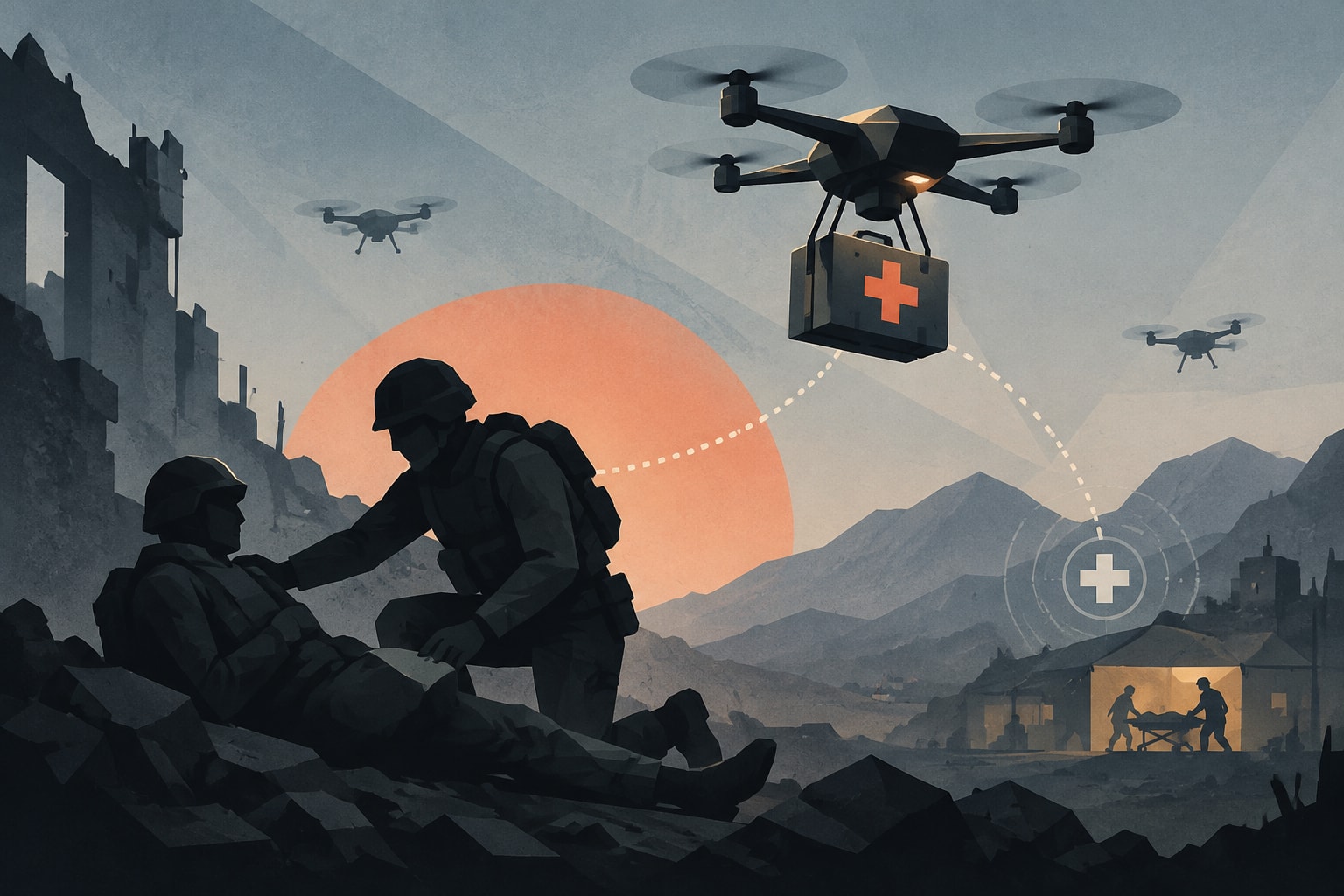
What's Happening
- •Ukrainian innovators are developing drones for frontline aerial evacuation of injured personnel.
- •DARPA is creating AI-assisted robots to locate and evaluate injured troops and civilians.
- •These advancements represent a competitive race to enhance battlefield medical capabilities.
Why It Matters
The advancements in battlefield drone technology are crucial for enhancing the survival rates of injured service members. As military operations become more complex, the integration of these technologies will likely redefine how medical care is delivered in combat zones, directly impacting the effectiveness of military medical personnel.
What Changes Now
- •The introduction of drones for medical evacuation will change how injuries are treated on the battlefield. Medics will need to familiarize themselves with drone protocols to ensure effective patient care.
- •AI-assisted robots will begin to play a role in casualty assessment. This will require training for personnel on how to interpret data provided by these robots during operations.
- •Funding and resources will be allocated to develop and deploy these technologies. This means that service members may see new equipment and training programs introduced in the near future.
What to Watch
- •Monitor upcoming DARPA announcements regarding AI-assisted robot deployments. Decisions made in the next six months will determine the timeline for field testing these technologies.
- •Watch for updates from military leadership on the integration of drone technology into existing medical protocols. Changes could be implemented as soon as the next training cycle begins.
- •Keep an eye on developments from Ukrainian innovators as they continue to refine their drone capabilities. Their successes or failures may influence U.S. military strategies and funding.
Get the Daily Briefing
Military and veteran news that actually affects you, in your inbox each morning.
More Context
- •The Role of Drones in Modern Warfare: Drones have transformed military operations, particularly in medical evacuation. The ongoing conflict in Ukraine has highlighted the need for rapid response capabilities, prompting innovators to create drones specifically designed for evacuating wounded soldiers from the battlefield. These drones can quickly transport injured personnel to safety, significantly increasing their chances of survival. As the technology evolves, we can expect to see more sophisticated systems that integrate real-time data and AI to assess injuries and coordinate medical responses.
- •DARPA's AI-Assisted Robots: The Defense Advanced Research Projects Agency (DARPA) is at the forefront of developing AI-assisted robots that can autonomously find and assess injured individuals in combat zones. These robots are designed to operate in challenging environments, providing critical information about the condition of casualties to medical teams. By streamlining the assessment process, these innovations aim to reduce the time it takes to deliver medical care, ultimately saving lives. The implications for military medics and support personnel are profound, as these technologies could redefine their roles on the battlefield.
- •Implications for Military Personnel: The advancements in drone technology and AI-assisted robots will directly impact various military personnel, particularly combat medics and logistics specialists. Active duty 68W Army medics, for example, will need to adapt to new protocols for integrating drone-assisted evacuations into their medical response strategies. Additionally, logistics personnel will play a crucial role in ensuring that these technologies are effectively deployed and maintained in the field. As these innovations become standard, training and operational guidelines will evolve to incorporate these new tools.
- •Looking Ahead: The Future of Battlefield Medicine: As the race for lifesaving battlefield drones continues, military leaders and policymakers must consider the ethical and operational implications of these technologies. Upcoming decisions regarding funding and deployment will shape the future of battlefield medicine. The integration of drones and AI into military operations could lead to a paradigm shift in how medical care is delivered in combat, emphasizing the need for ongoing training and adaptation among service members. Stakeholders should monitor developments closely to understand how these technologies will be implemented in real-world scenarios.
Frequently Asked Questions
Will these drones be used in all branches of the military?
Yes, the advancements in drone technology are expected to be adopted across all branches, enhancing medical evacuation capabilities for all service members.
How will this affect my training as a medic?
Training programs will likely be updated to include protocols for using drones and AI technologies, ensuring that medics are prepared for these advancements.
What are the ethical considerations of using AI in medical assessments?
Ethical considerations include ensuring patient privacy and the accuracy of AI assessments, which will be critical as these technologies are integrated into military operations.
The Daily Briefing
Military & veteran news that actually affects you — delivered every morning.
- Pay, benefits & policy changes
- Pentagon decisions that matter
- VA updates for veterans & families
- One email. No spam. Unsubscribe anytime.
Related Stories
- Air Force Cloud Platform Breached, Sensitive Data at Risk— Military.com
- North Korea's Kim Jong Un Vows to Expand Nuclear Arsenal— Military.com
- B-1B Lancer Pilots to Gain Extra Training Hours in Business Jets— Air & Space Forces Magazine
- AI Penetration Testing Cannot Replace Independent Cybersecurity Assurance— Federal News Network