Pentagon and FAA Finalize Safety Agreement for Counter-Drone Laser Systems
The Pentagon and FAA have signed an agreement allowing the deployment of counter-drone lasers, ensuring no increased risk to civilian aviation.
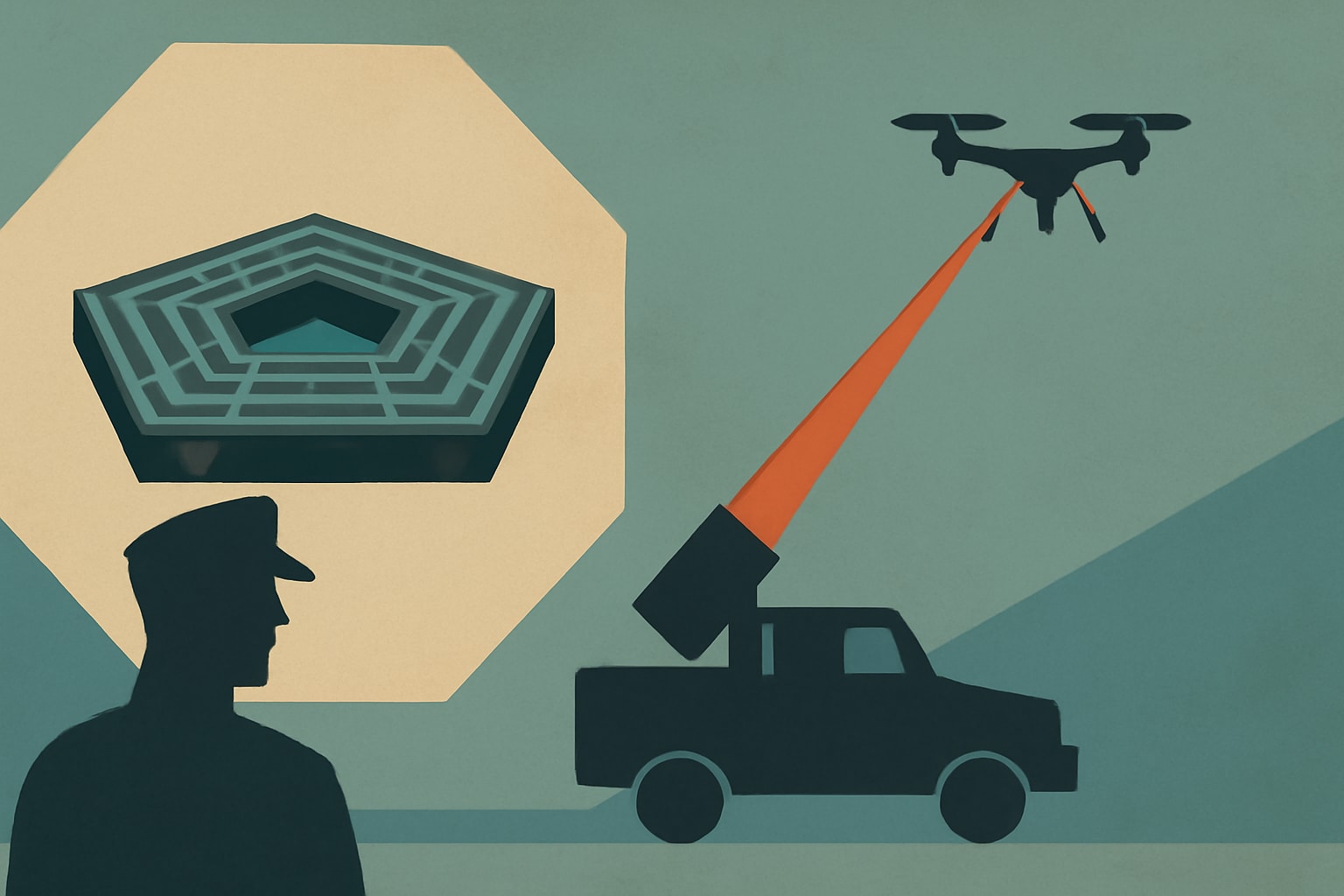
What's Happening
- •The Pentagon and FAA signed a safety agreement on April 13, 2026.
- •The agreement allows for the deployment of counter-drone laser systems at select military locations.
- •A Safety Risk Assessment confirmed these systems pose no increased risk to civilian aircraft.
Why It Matters
This agreement is significant for military personnel as it enhances the protection of military installations against drone threats. It also reflects a commitment to integrating advanced technologies responsibly, which is crucial for military families and surrounding communities.
What Changes Now
- •The Pentagon is now authorized to deploy counter-drone laser systems at designated locations. This development enhances security measures at military bases and critical infrastructure.
- •Safety protocols will be established to guide the operational use of these laser systems. These protocols will ensure that civilian air traffic remains safe while counter-drone operations are conducted.
- •Ongoing data collection and monitoring will be implemented to assess the effectiveness of the counter-drone systems. This will help refine operational procedures and ensure compliance with safety standards.
What to Watch
- •Future advancements in counter-drone technology are anticipated as the Pentagon and FAA collaborate. The integration of new technologies could further enhance national security measures.
- •Monitoring results from the deployment of counter-drone lasers will be crucial in assessing their effectiveness. This will likely influence future policy decisions regarding their use in civilian airspace.
- •The establishment of additional safety protocols may emerge from ongoing evaluations of the counter-drone systems. Stakeholders will be keen to see how these protocols evolve in response to real-world data.
Get the Daily Briefing
Military and veteran news that actually affects you, in your inbox each morning.
More Context
- •Overview of the Safety Agreement: In April 2026, the Pentagon and the Federal Aviation Administration (FAA) finalized a crucial safety agreement regarding counter-drone laser systems. This agreement comes after extensive assessments to evaluate potential risks these systems may pose to civilian air traffic. The FAA's approval signifies a pivotal step in integrating advanced military technologies into the national airspace while maintaining stringent safety standards.
- •Safety Risk Assessment Findings: FAA Administrator Bryan Bedford emphasized that a thorough, data-informed Safety Risk Assessment was conducted prior to the agreement's finalization. This assessment involved analyzing various factors, including the laser's power and range, and the safeguards in place to prevent accidental targeting of civilian aircraft. The findings confirmed that the deployment of these systems does not increase risks to the flying public, allowing for a more secure integration of counter-drone measures.
- •Importance of Counter-Drone Technology: The rise of unmanned aerial systems (UAS) has necessitated the development of counter-drone technologies to protect military installations and critical infrastructure. Drones can pose significant threats not only to military operations but also to public safety during large events. Counter-drone lasers are designed to disable or destroy threatening drones, providing a proactive defense mechanism that enhances national security while addressing safety concerns in shared airspace.
- •Ongoing Monitoring and Future Implications: The agreement includes provisions for continuous monitoring and evaluation of the counter-drone laser systems to adapt safety protocols as technology evolves. This collaborative effort between the Pentagon and FAA is essential for ensuring the responsible use of advanced technologies in a complex airspace environment. The agreement also sets a precedent for future collaborations between defense and civilian aviation authorities, which could lead to further innovations in counter-drone technologies.
Veteran Take
For those who've served, the introduction of counter-drone laser systems represents a crucial step in safeguarding our military installations and the communities around them. We understand the evolving threats on the battlefield, and having advanced technologies like these in our arsenal not only enhances our security but also reassures military families that their loved ones are being protected. It's vital that these innovations are integrated responsibly, ensuring the safety of both military operations and civilian airspace.
The Daily Briefing
Military & veteran news that actually affects you — delivered every morning.
- Pay, benefits & policy changes
- Pentagon decisions that matter
- VA updates for veterans & families
- One email. No spam. Unsubscribe anytime.
Related Stories
- Army Releases ‘Know the Threat’ Guide on Iranian Soldiers— Task & Purpose
- U.S. Army Awards $43 Million for New Software Platform on Classified Materials— Military Times
- Coast Guard Commandant Lunday Warns of TBI Risk From High-Speed Craft— Military.com
- Fort Hood Mass Shooter Nidal Malik Hasan to Die by US Army Firing Squad— Navy Times