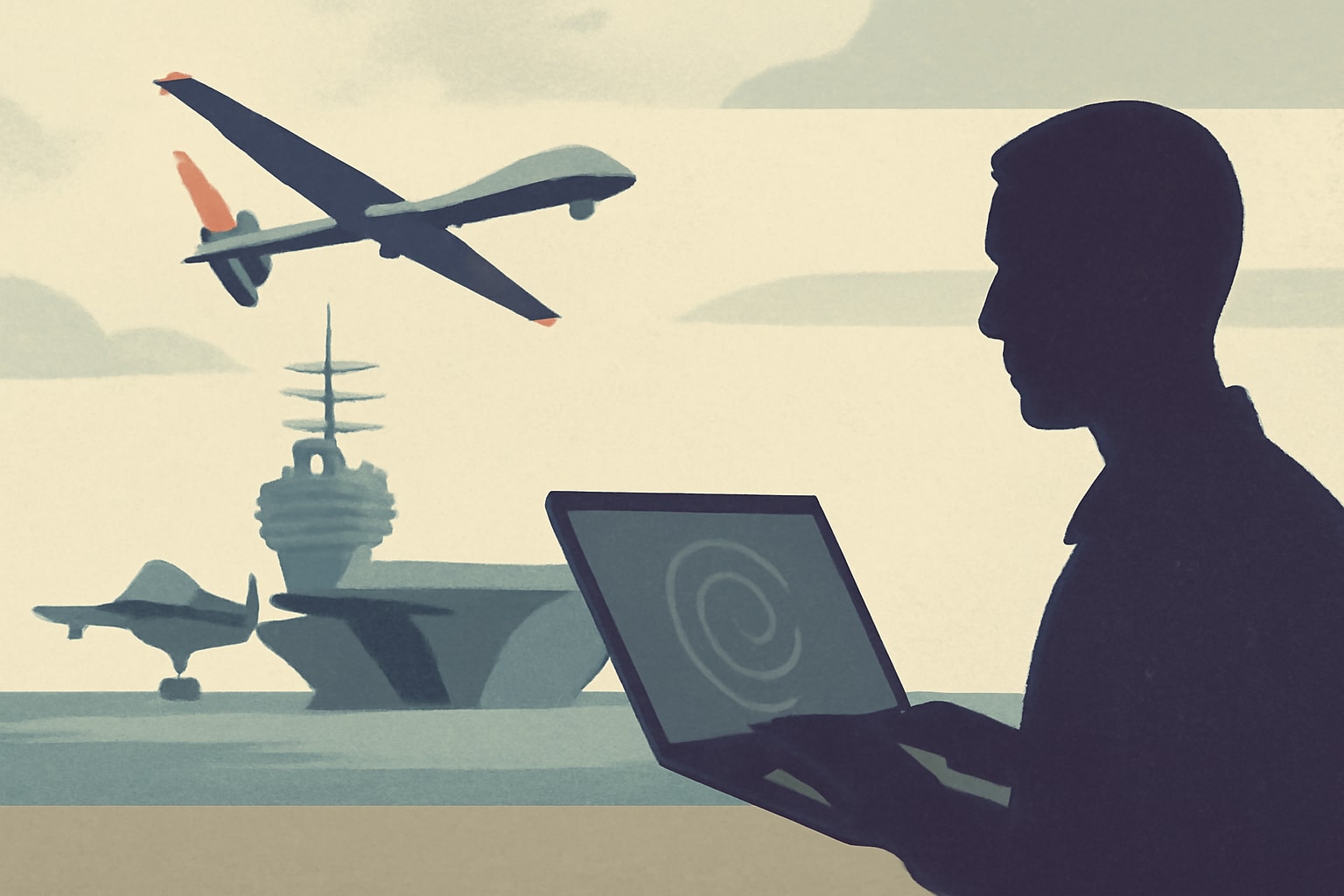
USS Theodore Roosevelt Becomes First Carrier with Unmanned Air Warfare Center
This new center will support the unmanned MQ-25A Stingray, marking a significant advancement in naval aviation.
What's Happening
- •The USS Theodore Roosevelt is now equipped with an Unmanned Air Warfare Center.
- •This center will support the operations of the MQ-25A Stingray unmanned aerial vehicle.
- •This advancement marks a significant milestone in naval aviation capabilities.
Why It Matters
The introduction of an Unmanned Air Warfare Center aboard the USS Theodore Roosevelt signifies a major advancement in naval warfare capabilities. For service members, this means new operational procedures and potential career opportunities in unmanned systems, which are becoming increasingly vital in modern military operations.
What Changes Now
- •The USS Theodore Roosevelt will begin integrating the MQ-25A Stingray into its operations. This change will enhance the carrier's capabilities and operational range, allowing for more effective mission execution.
- •Training programs for sailors in aviation and unmanned systems will be updated to reflect the new capabilities. Personnel will need to complete additional training to effectively operate and maintain the new systems.
- •Operational procedures on the USS Theodore Roosevelt will be revised to incorporate the use of unmanned systems. This will require sailors to adapt to new technologies and methods of engagement in naval operations.
What to Watch
- •Upcoming training sessions for personnel on the new systems will be scheduled. These sessions are crucial for ensuring that sailors are proficient in operating the MQ-25A Stingray and other unmanned systems.
- •The Navy will assess the effectiveness of the Unmanned Air Warfare Center in upcoming exercises. This evaluation will determine how well the new systems integrate with existing operations and inform future enhancements.
- •Future deployments of the USS Theodore Roosevelt may showcase the capabilities of the Unmanned Air Warfare Center. Observing these deployments will provide insight into how unmanned systems are utilized in real-world scenarios.
Get the Daily Briefing
Military and veteran news that actually affects you, in your inbox each morning.
More Context
- •Overview of the Unmanned Air Warfare Center: The newly installed Unmanned Air Warfare Center on the USS Theodore Roosevelt represents a pivotal shift in how the Navy approaches aerial warfare. Designed to enhance the operational capabilities of unmanned systems, this center will facilitate the integration of the MQ-25A Stingray into carrier operations. The MQ-25A is intended to serve as a refueling platform for manned aircraft, extending their range and operational flexibility. With this center, the Navy aims to streamline the command and control of unmanned systems, allowing for more effective mission planning and execution.
- •Impact on Naval Operations: The integration of the Unmanned Air Warfare Center is expected to significantly enhance the operational readiness of the USS Theodore Roosevelt. By allowing for real-time data sharing and improved communication between manned and unmanned systems, the carrier can respond more effectively to threats. This capability is particularly crucial in contested environments where traditional manned aircraft may face increased risks. The center will also support training and operational exercises that incorporate unmanned systems, ensuring that personnel are prepared for future combat scenarios.
- •Implications for Service Members: Active duty personnel, especially those in roles related to aviation and unmanned systems, will see direct implications from this advancement. Sailors in aviation ratings such as Aviation Boatswain's Mate (AB) and Naval Aircrewman (AW) will need to adapt to new operational procedures and training requirements. Additionally, the integration of unmanned systems will likely lead to new career opportunities within the Navy, as the demand for personnel skilled in operating and maintaining these technologies increases. This shift may also influence future recruitment and training programs to better prepare service members for evolving roles.
Frequently Asked Questions
How will this affect my training as an aviation sailor?
Training programs will be updated to include operations with the MQ-25A Stingray and other unmanned systems, ensuring you are prepared for new technologies.
Will there be new career opportunities related to unmanned systems?
Yes, as the Navy expands its use of unmanned systems, there will likely be increased demand for personnel skilled in operating and maintaining these technologies.
What changes can I expect during deployments?
Deployments will incorporate the new capabilities of the Unmanned Air Warfare Center, allowing for enhanced mission execution and operational flexibility.
The Daily Briefing
Military & veteran news that actually affects you — delivered every morning.
- Pay, benefits & policy changes
- Pentagon decisions that matter
- VA updates for veterans & families
- One email. No spam. Unsubscribe anytime.
Related Stories
- Congress Must Enhance TRICARE Budget Oversight for Military Families— Federal News Network
- Eight Sailors from USS Abraham Lincoln Strike Group Attempt Suicide— Military Times
- Coast Guard Unveils New Action Plan to Combat Sexual Assault— Military.com
- US Navy Should Target Chinese Aircraft Carriers, New Report Advises— Military Times