Tire Pressure Warning Light On? Here's What You Should Do
Service members must know how to respond to tire pressure emergencies to ensure safety on the road.
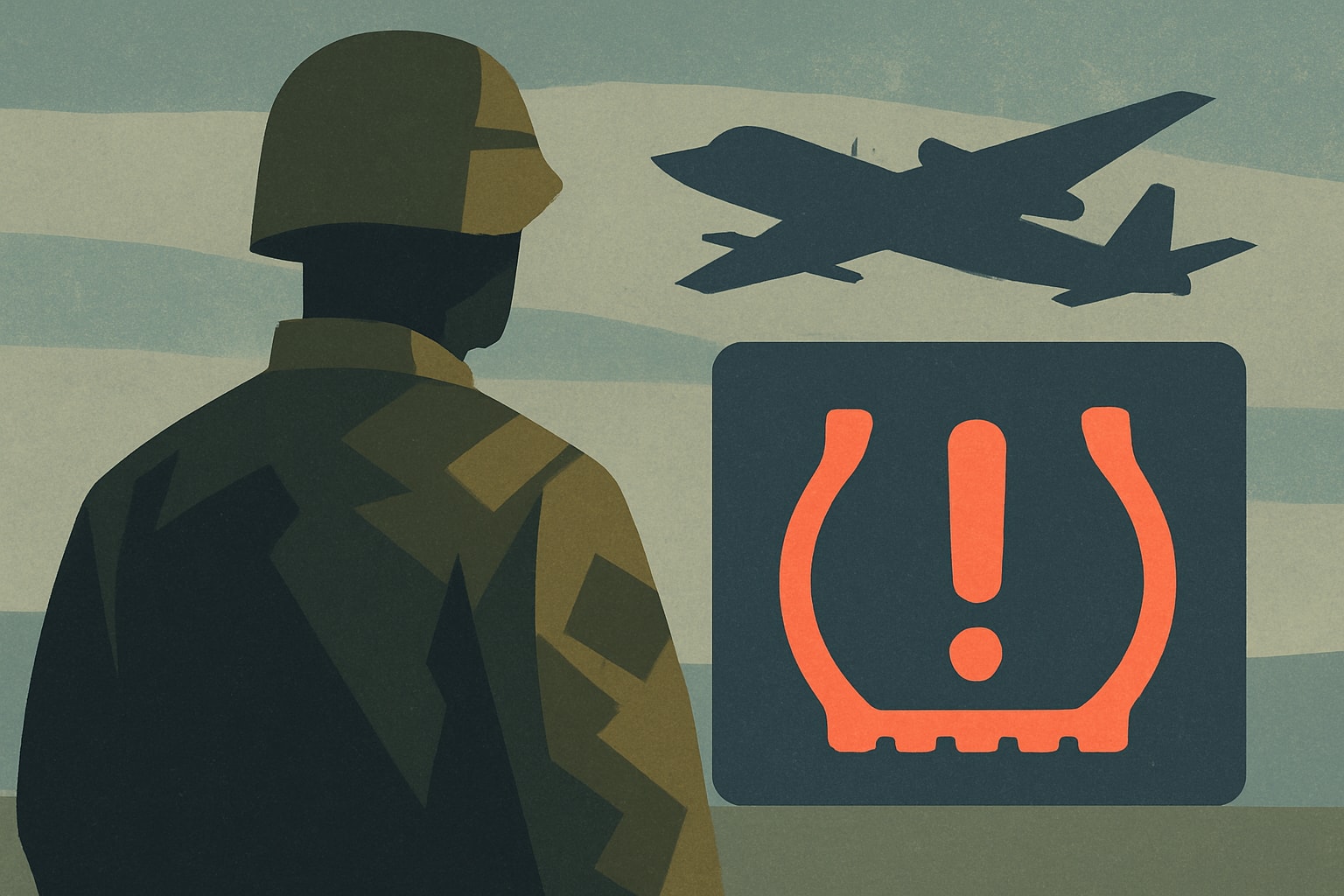
What's Happening
- •The tire pressure warning light indicates that one or more tires are under-inflated.
- •Driving with low tire pressure can lead to tire blowouts and loss of vehicle control.
- •Service members should check tire pressure regularly, especially before long trips.
Why It Matters
For service members and their families, vehicle safety is paramount, especially during deployments or travel. Understanding how to respond to tire pressure issues can prevent accidents and ensure readiness on the road.
What Changes Now
- •Service members should immediately check their tire pressure if the warning light activates. This action is crucial to ensure safety and prevent further vehicle damage.
- •If a tire is found to be low, it should be inflated to the recommended pressure as soon as possible. This can typically be done at a gas station or through base services.
- •In case of a flat tire or visible damage, contacting roadside assistance is essential. Knowing the proper contacts can save time and ensure safety.
What to Watch
- •Watch for upcoming vehicle safety inspections mandated by your unit. These inspections may include tire checks and can help identify issues before they become emergencies.
- •Stay informed about any changes in base automotive service hours, especially during holidays. Adjusting your schedule can ensure you receive timely assistance.
- •Monitor seasonal changes that may affect tire pressure, such as temperature drops in winter. Understanding these factors can help maintain optimal tire health.
Get the Daily Briefing
Military and veteran news that actually affects you, in your inbox each morning.
More Context
- •Understanding the Tire Pressure Warning Light: The tire pressure warning light is a crucial indicator that alerts drivers to low tire pressure, which can compromise vehicle safety. For active-duty service members, particularly those in roles that require frequent travel, understanding this warning can prevent dangerous situations. The light typically looks like a flat tire icon and may illuminate in yellow or red, depending on the severity of the issue.
- •Immediate Steps to Take: When the tire pressure warning light comes on, the first step is to safely pull over to the side of the road. Once stopped, check the tire pressure using a gauge; this can often be done at a nearby gas station. If you find that a tire is significantly under-inflated, it’s important to inflate it to the recommended pressure as soon as possible. If you cannot inflate the tire or if it appears damaged, contact roadside assistance for help.
- •Long-Term Maintenance Tips: To prevent the tire pressure warning light from activating unexpectedly, service members should regularly check their tire pressure, ideally once a month and before long trips. Keeping tires properly inflated not only ensures safety but also improves fuel efficiency. Additionally, rotating tires every 5,000 to 7,500 miles can help maintain even wear and prolong tire life.
- •Resources for Service Members: Active-duty personnel can access resources through their installation’s automotive care center for assistance with tire maintenance. Many military bases offer discounted tire services, including pressure checks and rotations. Furthermore, service members can utilize apps or tools available on military websites to track vehicle maintenance and tire health.
Frequently Asked Questions
What should I do if my tire pressure light comes on while driving?
Safely pull over, check your tire pressure, and inflate if necessary. If you cannot resolve the issue, contact roadside assistance.
How often should I check my tire pressure?
You should check your tire pressure at least once a month and before long trips. Regular checks can help prevent emergencies.
Veteran Take
For those who've served, vehicle maintenance often takes a backseat to the demands of duty, but we know that safety on the road is just as critical as any mission. Veterans navigating this will appreciate the importance of being prepared, especially when traveling with family or during deployments. Understanding tire pressure and how to respond to warning lights isn't just about preventing accidents; it's about ensuring we can always be there for those who depend on us.
The Daily Briefing
Military & veteran news that actually affects you — delivered every morning.
- Pay, benefits & policy changes
- Pentagon decisions that matter
- VA updates for veterans & families
- One email. No spam. Unsubscribe anytime.
Related Stories
- Pentagon Cuts Army Civilian Hiring Time from 161 Days to 47— Federal News Network
- Army Pilots AI-Backed Maintenance Program to Streamline Repairs— DefenseScoop
- U.S. Army Soldiers to Train on New Basics of Unmanned Systems— Military Times
- Anduril Secures $1.8 Billion Contract to Enhance Army Command System— Military Times