T-38 Crash Caused by Under-Torqued Pin: Key Findings and Implications
An accident report reveals that an improperly installed pin led to a T-38 trainer jet crash, halting flights across the fleet.
What's Happening
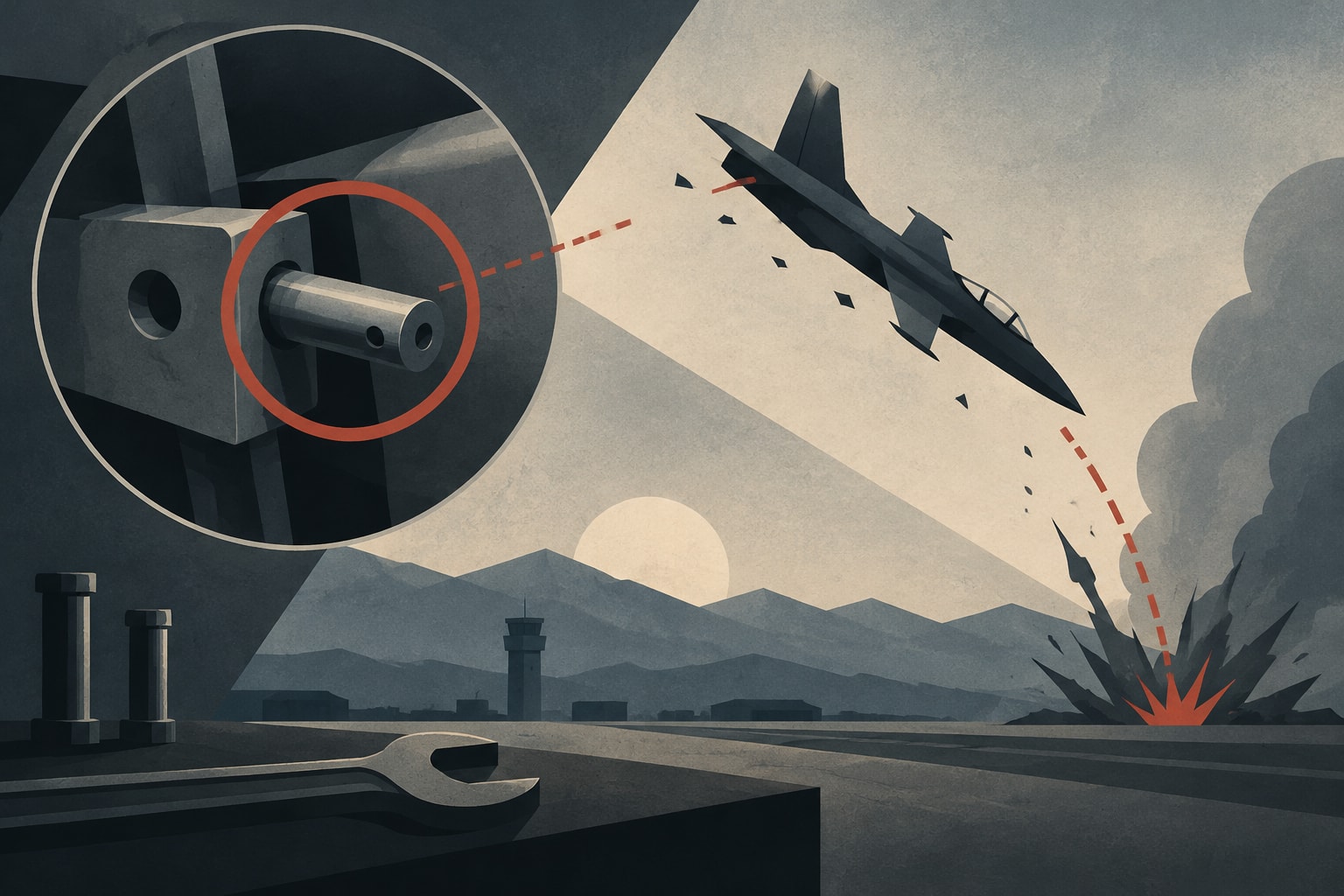
- •An accident report identifies an under-torqued pin as the cause of a T-38 crash in May 2026.
- •The crash led to a temporary halt of T-38 flights across the fleet for several weeks.
- •Aerodynamic flutter caused by the disengagement of the pin resulted in the loss of both horizontal stabilizers.
Why It Matters
The T-38 trainer jet is a critical component of Air Force pilot training, and any issues affecting its safety directly impact the readiness of future aviators. Understanding the causes of this crash can lead to improved safety protocols, ensuring that service members are adequately trained in a reliable environment.
What Changes Now
- •The Air Force will likely revise maintenance protocols for the T-38 fleet. This change aims to enhance safety and prevent similar incidents from occurring in the future.
- •Training operations for T-38 pilots may see adjustments in scheduling and aircraft availability. Affected units will need to communicate these changes to their personnel to minimize disruptions.
- •Increased inspections and oversight of maintenance procedures are expected. This will ensure that all personnel involved are adhering to updated safety standards and practices.
What to Watch
- •Look for updates on revised maintenance protocols from the Air Force. These changes will be crucial for ensuring the safety of the T-38 fleet moving forward.
- •Monitor the status of T-38 flight operations as the Air Force resumes training. The timeline for returning to normal operations will depend on the implementation of new safety measures.
- •Upcoming evaluations of pilot training programs may reflect changes in aircraft availability. Stakeholders should prepare for potential shifts in training timelines and methods.
Get the Daily Briefing
Military and veteran news that actually affects you, in your inbox each morning.
More Context
- •Details of the T-38 Crash: In May 2026, a T-38 trainer jet crashed during a routine flight, prompting an investigation that revealed critical failures in maintenance procedures. The accident report, released on October 30, 2026, highlighted that an improperly installed pin for one of the jet's horizontal stabilizers was the primary cause. When the pin disengaged mid-flight, it created a slight 'play' in the stabilizer system, leading to aerodynamic flutter. This flutter ultimately caused both stabilizers to detach, resulting in the crash. The incident raised serious concerns about maintenance protocols and the implications for pilot safety.
- •Impact on Training Operations: The crash had immediate ramifications for T-38 training operations, leading to a suspension of flights across the fleet for several weeks. This pause affected numerous pilot training programs, particularly for those in the Air Force who rely on the T-38 for advanced flight training. The grounding of the aircraft not only delayed training schedules but also raised questions about the reliability of the fleet. As the Air Force assesses the situation, it is crucial for training units to adapt to potential changes in aircraft availability and safety measures.
- •Future Safety Measures: In light of the findings from the accident report, the Air Force is expected to implement stricter maintenance protocols to prevent similar incidents. This may include enhanced training for maintenance personnel on proper installation techniques and regular inspections of critical components. Additionally, there could be an increased focus on safety culture within the aviation community to ensure that all personnel understand the importance of adhering to maintenance standards. The ongoing evaluation of aircraft safety will be vital for restoring confidence in the T-38 fleet.
Frequently Asked Questions
Does this crash affect Guard members on Title 10 orders?
Yes, any changes in T-38 training operations will impact Guard members who are currently training or scheduled to train.
Will my training be delayed due to the T-38 crash?
If you are scheduled for T-38 training, there may be delays as the Air Force implements new safety protocols and resumes flight operations.
What should maintenance personnel do differently after this incident?
Maintenance personnel should review updated protocols and training materials to ensure they are following best practices for aircraft maintenance.
The Daily Briefing
Military & veteran news that actually affects you — delivered every morning.
- Pay, benefits & policy changes
- Pentagon decisions that matter
- VA updates for veterans & families
- One email. No spam. Unsubscribe anytime.
Related Stories
- NORAD F-16s Conduct Homeland Defense Mission in Alaska's Aleutian Islands— Air & Space Forces Magazine
- Space Force Plans to Launch Cislunar Satellite Constellation by 2029— Air & Space Forces Magazine
- F-16 Jets to Add Startup Castelion’s Hypersonic ‘Blackbeard’ Missile— Air & Space Forces Magazine
- Mar-a-Lago Receives New Missile Defenses Amid Rising Security Costs— Military.com