AI to Transform Military Logistics Amid Growing Threats
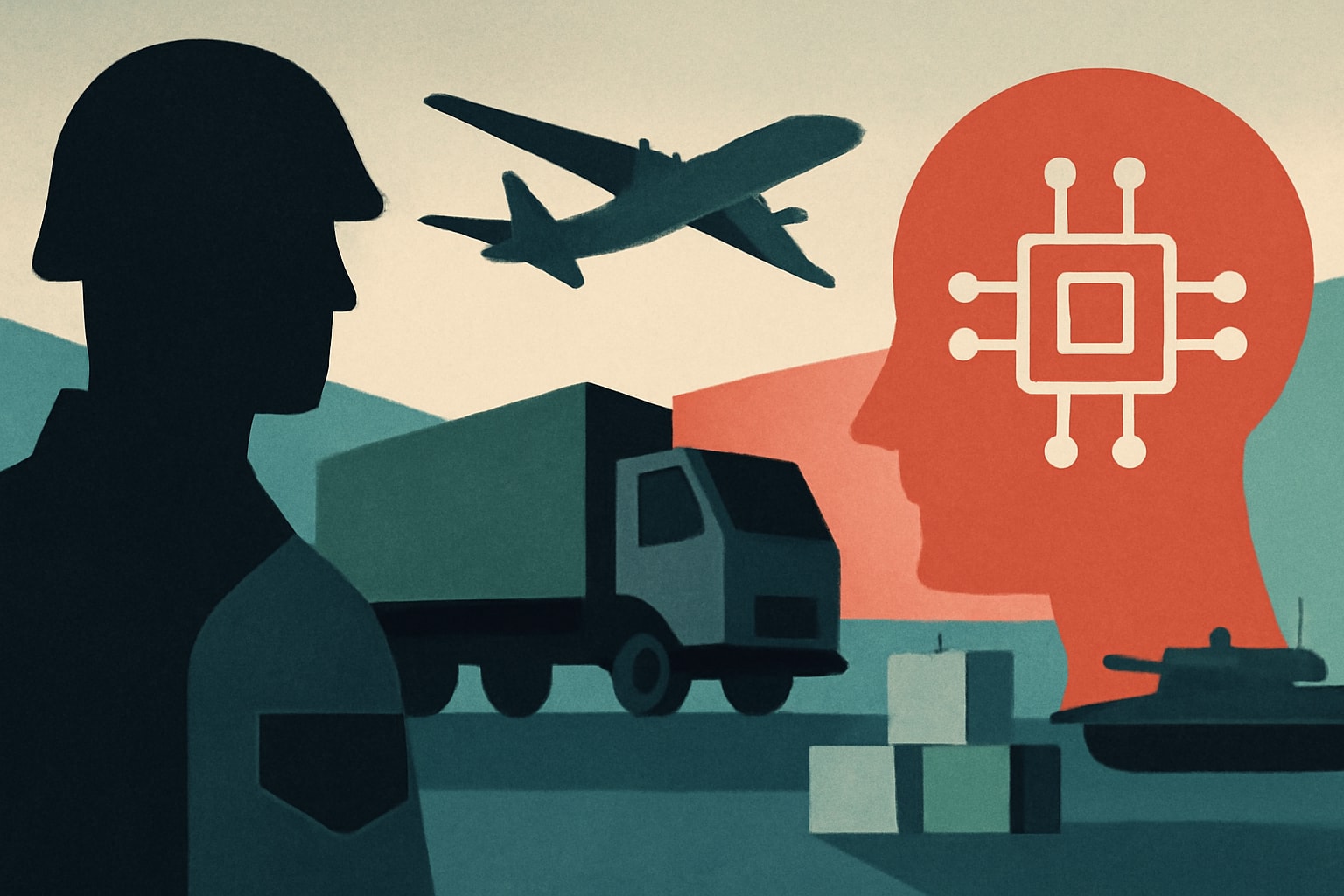
Gen. Randall Reed emphasizes AI's dual role in logistics, enhancing efficiency while posing risks from adversaries.
What's Happening
- •Gen. Randall Reed highlights AI's potential to improve military logistics.
- •AI is seen as a tool that could be exploited by adversaries to mislead military operations.
- •The emphasis is on the need for vigilance in AI deployment within logistics.
Why It Matters
The military's reliance on logistics is critical for operational success, making advancements in this area vital. Understanding AI's role and the associated risks will help service members navigate potential challenges and leverage new tools effectively.
What Changes Now
- •The military will begin integrating AI tools into logistics processes. This change will require training for logistics personnel to ensure effective use of new technologies.
- •Increased emphasis will be placed on cybersecurity measures related to AI applications. Service members will need to be vigilant and trained to recognize potential AI manipulations.
- •Logistics roles may evolve as AI automates certain tasks. Personnel will need to adapt to new responsibilities and workflows as AI becomes more prevalent.
What to Watch
- •The Department of Defense's upcoming guidelines on AI integration in logistics are expected by mid-2027. These guidelines will shape how AI is utilized and managed within military operations.
- •Results from ongoing AI pilot programs are anticipated by late 2026. These results will provide valuable insights into the effectiveness and risks of AI in real-world logistics scenarios.
- •Training initiatives related to AI tools will be rolled out in 2027. Service members should monitor these initiatives to prepare for changes in their roles.
Get the Daily Briefing
Military and veteran news that actually affects you, in your inbox each morning.
More Context
- •AI's Potential in Military Logistics: Artificial intelligence is rapidly becoming a cornerstone in military logistics, with leaders like Gen. Randall Reed advocating for its integration. AI can streamline supply chains, optimize resource allocation, and enhance decision-making processes, making logistics less predictable and more efficient. For instance, AI algorithms can analyze vast amounts of data to forecast supply needs and identify potential bottlenecks before they become critical. This capability is particularly vital for active-duty service members, especially those in logistics roles such as 88N (Transportation Management Coordinator) and 92Y (Unit Supply Specialist), who rely on timely and accurate information to execute missions effectively.
- •Risks of AI in Logistics: While AI presents significant advantages, Gen. Reed warns of its potential as an 'engineered vulnerability.' Adversaries could manipulate AI algorithms to create misinformation, leading military logisticians to make catastrophic decisions based on flawed data. This risk is particularly concerning for units engaged in high-stakes operations where logistics play a crucial role, such as those deployed in conflict zones. As a result, military leaders must prioritize cybersecurity measures and robust training for personnel to mitigate these risks.
- •Implications for Service Members: The integration of AI into logistics will have immediate implications for service members across various ranks and specialties. For example, active-duty E-5 to E-7 logistics specialists will need to adapt to new technologies and processes as AI tools are implemented. Training programs will be essential to ensure that personnel can effectively utilize these tools while understanding the associated risks. Additionally, the potential for AI to automate certain logistics functions may lead to shifts in job responsibilities and career paths within the logistics field.
- •What to Monitor Moving Forward: As the military continues to explore AI's role in logistics, several key developments are on the horizon. The Department of Defense plans to release guidelines on AI integration in logistics by mid-2027, which will outline best practices and risk management strategies. Additionally, ongoing pilot programs are expected to provide insights into AI effectiveness in real-world scenarios, with results anticipated by late 2026. Service members should stay informed about these developments, as they will directly impact logistics operations and training requirements.
Frequently Asked Questions
How will AI affect my logistics job in the military?
AI is expected to automate some logistics tasks, which may change your responsibilities. Training will be provided to help you adapt to these new technologies.
What risks does AI pose for military operations?
AI can be manipulated by adversaries, potentially leading to incorrect decisions based on false data. It's crucial for military personnel to be aware of these risks and receive proper training.
When will AI tools be implemented in military logistics?
AI tools are currently being piloted, with broader implementation expected by 2027. Stay informed about training opportunities and new guidelines.
The Daily Briefing
Military & veteran news that actually affects you — delivered every morning.
- Pay, benefits & policy changes
- Pentagon decisions that matter
- VA updates for veterans & families
- One email. No spam. Unsubscribe anytime.
Related Stories
- Navy Reorganizes Public Works Team to Speed Up Repairs— Federal News Network
- Pentagon Introduces New Warfighter Evaluation for Officer Promotions— Military Times
- Geissele Automatics Reveals Production-Ready Assault Rifle for SOCOM— Army Times
- SOCOM Launches Nutrition App to Enhance Performance and Lethality— Military Times